
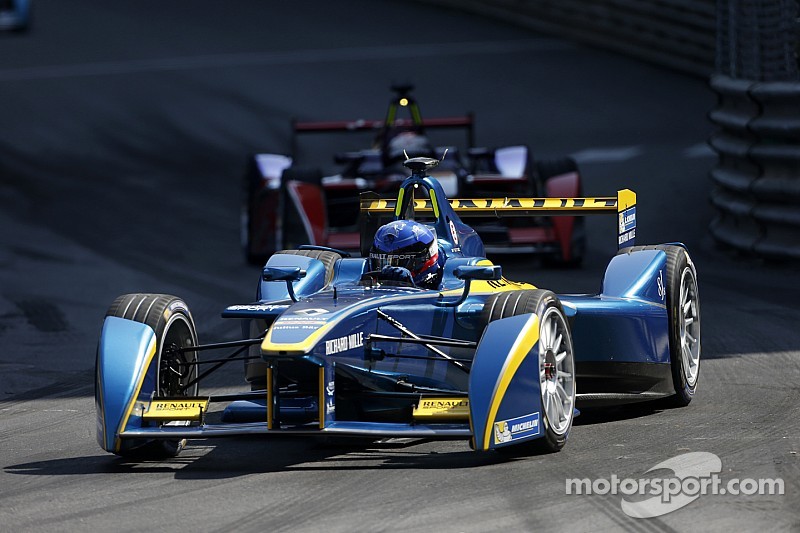
FOR ME, car racing has always been associated with roaring engines and the smell of fuel.So, when the inaugural Formula E season kicked off in September last year, I wasn’t that fussed.I like electric cars, I just didn’t think they could match up to the power and prestige of Formula 1.
But after a few races I was hooked.
Why? Firstly, the races weren’t dominated by a single team, with only three drivers winning more than one race all season.
And the championship comes down to the very last lap of the very last race.
The inaugural decider was held on the streets of London where China Racing’s Nelson Piquet Jr narrowly beat former F1 driver Sebastian Buemi by one point.
It was a finale that rivalled this year’s Bathurst 12 Hour. It was epic, and epic just isn’t what Formula 1 is anymore.
Moments like that were littered throughout the first series.
Even the first race of the season was intense. During the last few laps the two race leaders, who had been battling it out all day, got tangled up and crashed out at the very last corner.
It’s that sort of spectacle that people used to love about Formula 1.
With Lewis Hamilton 20 seconds ahead after two laps, the only time we will see that now is if serial crash artist Romain Grosjean forgets how to turn at the first corner and takes out half the field.
For those who haven’t seen a race, the limitations of current battery technology means that each Formula E car can only last around half the race, with the cars pitting not to fill up fuel, but to swap cars entirely.
On the surface it seemed stupid, but as the season progressed it created drama and suspense. Drivers who made mistakes early on, damaging their cars, could continue knowing they were only laps away from getting a replacement.
These types of swaps created some of the greatest driving comebacks in modern racing.
What’s most surprising about Formula E is that it’s governing body, the FIA is doing everything right.
This is the same governing body that looks after Formula 1, a sport which has recently been dogged by controversy over the dominance of the big teams. (Red Bull threatened to walk away over its claims it can never win because Mercedes is too dominant).
But with Formula E, none of that drama exists. It’s cheaper for teams to enter into, tracks like the streets of London or Moscow are breathtakingly beautiful.
Some Formula E races are even free, a tact used by the organisers to get as many fans in the gates as possible.
As a result, countries around the world are begging to host races, including Australia.
The sport has some serious backers too, including Richard Branson who told reporters at last weekend’s finale that he believes Formula E will overtake Formula 1 in four years.
Leonardo DiCaprio himself owns a team, as do big car companies like Renault and McLaren.
But the biggest advantage that Formula E has over traditional motorsport is that it’s a series designed from the ground up for the next generation of car owners and motorsport fans.
Teenagers and young adults looking to buy cars in five to ten years won’t be looking to buy a fast petrol engine.
The development of electric and hybrid cars by the companies such as Tesla, Toyota and BMW, will help make Formula E the sport younger fans will be able to relate to most.
Car makers spend tens of millions of dollars every year on motorsport, it helps them sell cars and develop new technology.
If the fans start to move their eyeballs from Formula 1 to Formula E, so will the manufacturers.
And that’s a big problem for F1.
Photo: Motorsport .com