
It looks like the Nissan GT-R is trying to eat the red Audi R8 pace car in front of it for lunch.The two speed demons are slithering their way around Circuit de la Sarthe in Le Mans, France, leading a caravan of brand-new GT-Rs driven by journalists from around the world. But the man behind the wheel of the lead GT-R glued to the pace-car’s bumper is no journalist.
He is Andy Palmer, Nissan EVP and head of product planning—and he was desperate to drive faster.
“We had an Audi pace car out there that was just too slow,” he says in an interview following the lap at Le Mans, one of several unique events at the legendary track leading up to the start of one of the most famous endurance race in the world, the 24 Hours of Le Mans. “So we didn’t get above 280 K’s [kilometers per hour], which is a bit of a pity because the car was itching to be pushed. But anyway, it’s still a privilege to get out there and drive on this fabulous track.”
It might seem surprising to encounter an exec with such passion for speed in a company that lately has been focusing most of its research and development on fuel economy, electric vehicles and autonomous driving. But motor sports and performance vehicles are still very much a part of Nissan’s long-term plans. In fact, the company is ramping up its Nismo performance division, preparing to create more sporty spin-offs, such as the Nissan Juke Nismo, from its regular lineup than ever before.
“Nissan’s mantra, brand position, whatever text book expression you want to use, is ‘Innovation and excitement for everyone,’” Palmer says. “And it’s those three words basically that capture everything.”
Although vehicles like the 370Z sports car, which Palmer races, and the recently launched GT-R Nismo are at the forefront of Nismo as so-called halo vehicles that draw attention to the brand and provide a direct link to motor sports, Palmer sees the importance of focusing more broadly, particularly when it comes to future performance vehicles.
“‘For everyone’” is sometimes forgotten, but for me it is the most important part of the sentence,” he says. “Because ‘for everyone’ is basically democratization. I talk about Nismo being a democratization of Mercedes AMG—it’s the sports car breed that basically everyone can afford. So whether it be the fastest production car around the Nurburgring that you can buy for $151,000, or whether it’s a Juke Nismo, basically we can make it accessible to everyone without getting all snooty about it.”
Nismo goes so far as to offer something for those who can’t afford a car at all, through the company’s partnership with the Gran Turismo video game franchise and GT Academy competition, which turns gamers into real-life racers.
“It means that basically, if you’re good enough, then you can go racing, it doesn’t matter the size of daddy’s wallet,” Palmer says. “And as long as you’re able to buy into, or borrow from a mate, a PlayStation PS4, and you’re good enough, then we’ll take you all the way to Le Mans and maybe even all the way to Formula One. And that’s what I mean by the democratization.”
Perhaps the most interesting inflection point for Nissan’s efforts with Nismo in the coming years is the intersection of speed and efficiency as embodied by the radical Nissan Zeod RC electric race car. It ran at this year’s Le Mans race, but fell out of contention prematurely due to a gearbox failure, not before setting a record for the highest speed achieved by an electric vehicle at Le Mans, at a top speed of 186 miles per hour.
The Zeod RC’s unique arrowhead shape, with a front end much narrower than the rear, increases aerodynamic efficiency and makes the vehicle so light that it can use a small three-cylinder engine that is one-half to one-third the size of other race cars’ engines and still be just as quick. (The Zeod RC has a gasoline engine to help charge the batteries; it also powers the wheels, though not when the electric motors are running.)
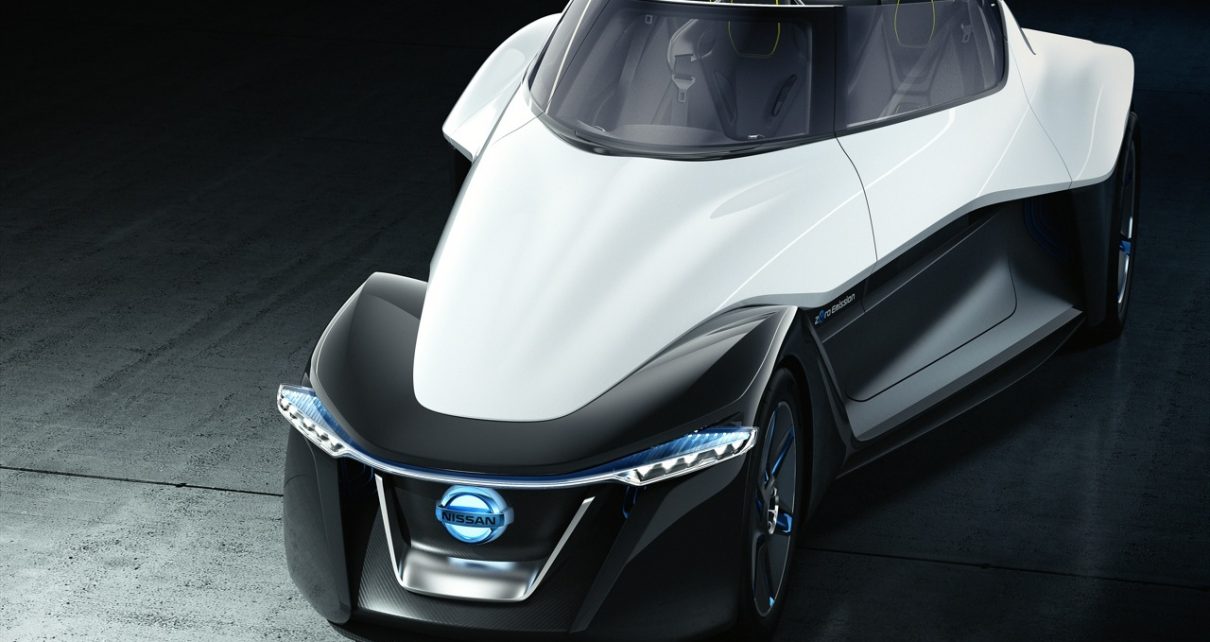
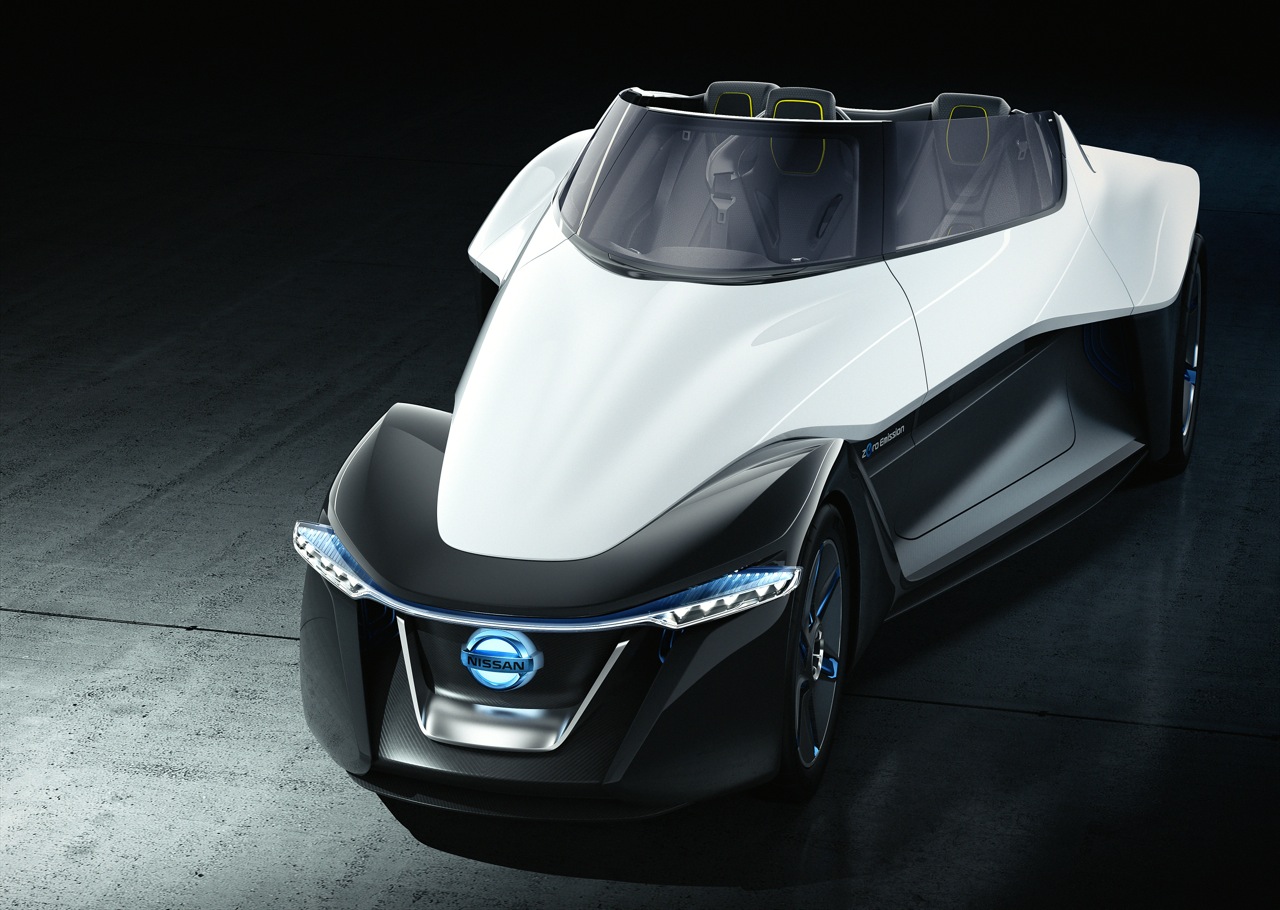
Nissan is now developing a road vehicle, previewed by the BladeGlider concept shown at the Tokyo Motor Show last fall, that uses the same principles as the Zeod RC. “It’s basically saying you can have a fun electric sports car that’s very different from today’s technology,” Palmers says.
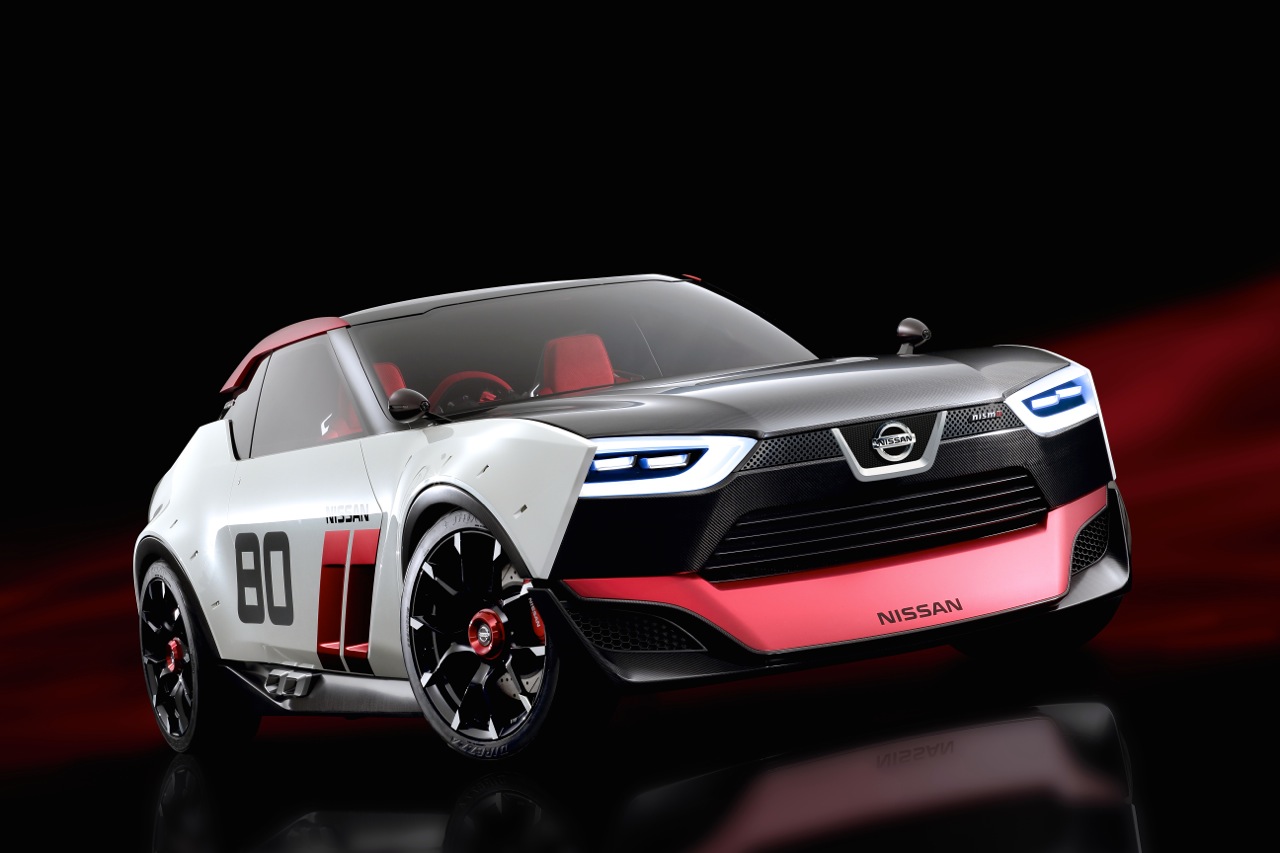 The company is also working another small, lightweight sports car called the IDx that blends fun and efficiency. But this car, also shown in concept form at the Tokyo Motor Show last year, follows a more traditional approach. It uses a small gasoline engine and rear-wheel drive, much like the company’s beloved Datsun 510, with which it shares styling cues.
“Hopefully we’ll always have a GT-R,” Palmer says. “Hopefully we’ll always have a Z. But at the same time, what I’d like to have is the IDx and the BladeGlider to compliment the spectrum.”
Though both still seem far afield of the company’s current focus on expanding its lineup of mass-market sedans and crossovers while continuing to invest heavily in electric vehicles like the Leaf, Palmer insists they are officially part of the company’s midterm plan that extends to 2018.
“Does that guarantee absolutely that we’ll do the cars? It doesn’t,” he says. “But basically, it’s in the plan. The technology exists, we know who the customer is, we’ve essentially laid out the R&D budget that allows it to happen. Now, basically, it’s about making the economics work.”