
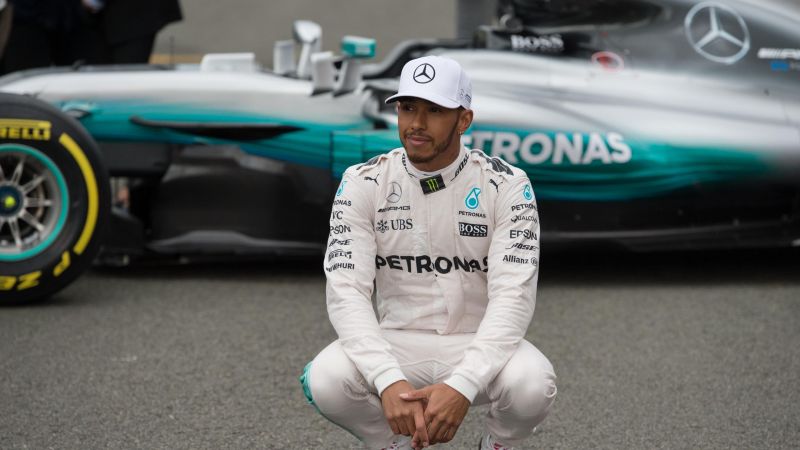
It was obvious from day one. The words of McLaren boss Ron Dennis, spoken a few months before Hamilton came third in his first race in Australia back in 2007, were prophetic: I am distinctly unimpressed with the majority of drivers currently involved in Formula One. I feel Lewis is well equipped to deal with these drivers who fall into that category.”
He certainly was. Hamilton lost out on the title in the final race of the season and was only beaten by one point by Kimi Raikkonen. It immediately established him as a leading light in F1. The youngest ever driver to come second in the championship, Hamilton set fire to the sport in that stunning debut season, reconfiguring a stale grid around a character whose impact on his sport would be profound.
Ten seasons and three world titles later, Hamilton is again favourite to finish the 2017 season at the top of the pile. Nico Rosberg dethroned him last season, even if Hamilton won more races in the Mercedes, but the German’s retirement from the sport opens up a potential new chapter of Hamilton dominance.
The 2017 season is one of fundamental change in F1, with Bernie Ecclestone no longer in charge following the takeover by Liberty Media, but Hamilton is still the dominant figure in the paddock, and also at Mercedes, where Valtteri Bottas is very much a junior partner.
But how long can Hamilton’s dominance extend into the distance, and could the end be closer than we think?
But the move to Mercedes made Hamilton a leading force one more, with two titles and a second place in his past three years. With Rosberg gone, the field would seem to be clear for Hamilton to reassert his supremacy.