

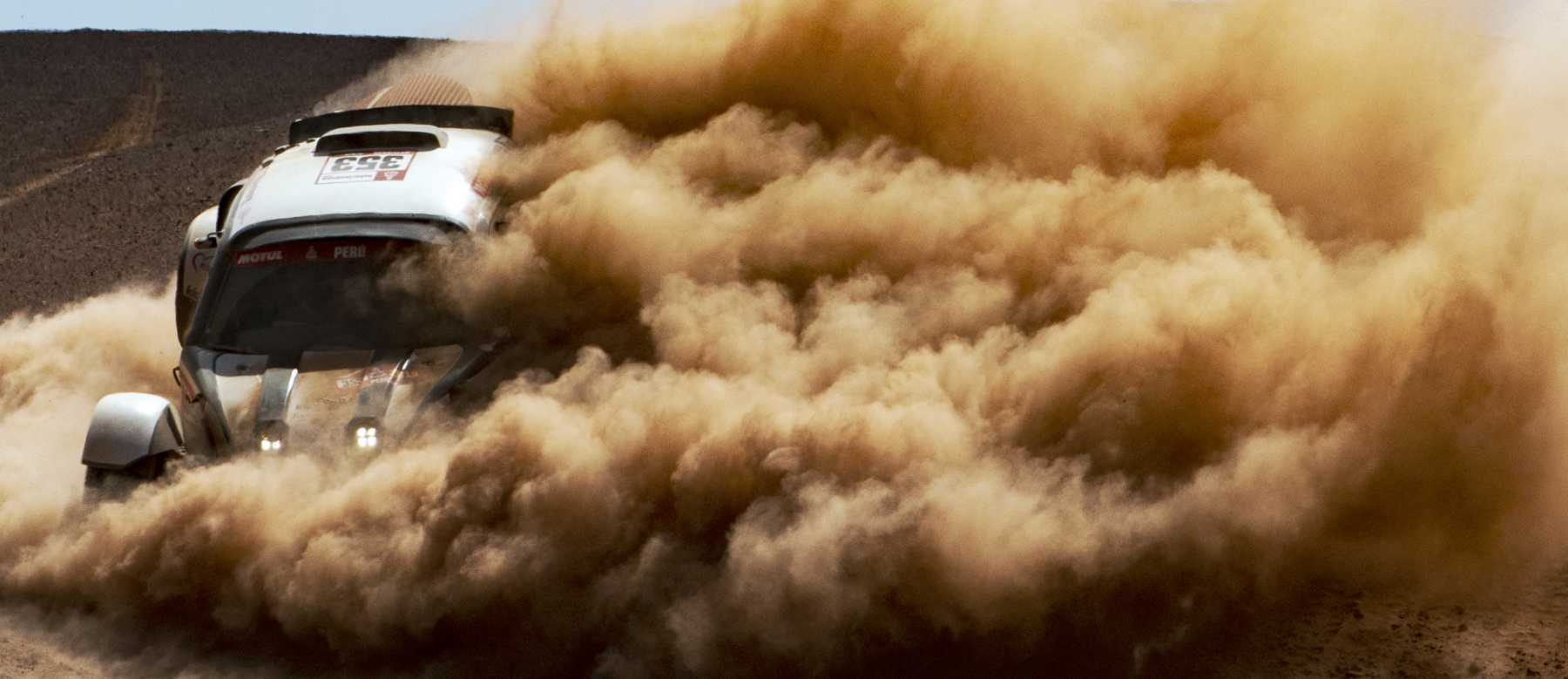
The first stage with 84km (the longest first stage in Dakar history) was like a very soft introduction. The second one dropped the participants in the middle of the Peruvian desert with all the benefits: sand, stones, heat and dust… tons and tons of dust like nowhere else on earth. From that point until the end the detail that pops out in every single image is the dust: white dust, brown dust, yellow dust, grey dust… We already had our fair share of “racing dust” but like this we never saw.
The long stages in such a demanding terrain like the Peruvian desert are already a big challenge. The dust adds such a nasty extra layer of difficulties that to be able to reach the halfway mark in this race is already a big achievement.
The participants and their mechanics are “enjoying” maybe the most difficult South American Dakar ever, that seems like not being marked by rain, like many of the recent editions, of which some stages were even cancelled due to the wet conditions, but by the extreme dryness of the Peruvian ground.
The race continued for 5 more days until the arrival back in Peru’s capital Lima. The conditions were expected to improve a little bit as the route moves to areas with less dust and more sand, but the dust clouds was still there. Remembering the Portuguese legend of King Sebastian, who is still expected home after vanishing in the Moroccan fog hundreds of years ago, maybe all the ones that were able to emerge from this year’s Dakar dust in Lima on Thursday could be crowed Kings of the Dakar Rally in one of its most intense and hardest editions until now, even if it had the shortest distance ever.