
 Nazri also noted Malaysia’s failure to produce any “quality F1 drivers” over the past two decades.
A month earlier, Khairy Jamaluddin, the minister of youth and sports, said on Twitter that Malaysia should stop hosting F1 “at least for a while” because of its exorbitant cost and weak revenue.
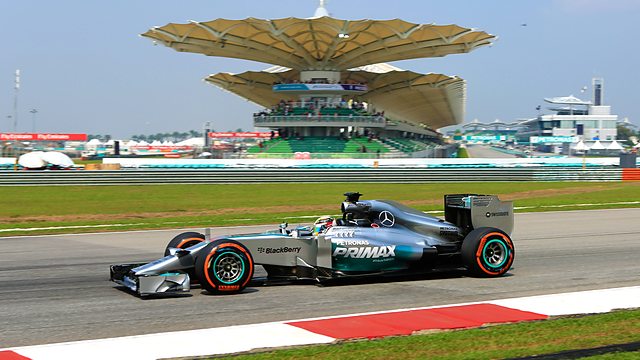
Malaysia began hosting F1 in 1999 at the Sepang International Circuit, south of Kuala Lumpur.
Petronas, the state oil company, has been a major sponsor of both the event and the U.K.-based Mercedes AMG Petronas Formula One Team. Although it has posted improved profits recently, the general outlook in the energy sector remains grim with Brent crude oil falling below $50 per barrel again in October.
Motor racing’s future is also in the balance in neighboring Singapore, where the current F1 contract is due to expire next year. Bernie Ecclestone, chief executive of Formula One Group, told The Straits Times that negotiations are ongoing and “will be sorted out” by end of the year, but also told a German autosport magazine earlier that Singapore no longer wants to host F1.
Singapore came to Grand Prix racing in 2008, and it costs about $105 million annually, of which 60% is paid by the government. Attendance this year in September was down to 73,000 spectators, a 16% drop compared to 2015.
Singapore and Malaysia are among 21 countries that host F1, and the only ones in Southeast Asia, so the region seems likely to be left without a Grand Prix event in two years. The 5.5km Sepang International Circuit has, however, recently been resurfaced and will continue to host MotoGP motorcycle races after extending its contract for five years in October.
According to the provisional calendar for 2017 released by the Federation Internationale de l’Automobile (FIA), the sport’s governing body, Australia’s Melbourne, China’s Shanghai, and Japan’s Suzuka are the other venues in Asia-Pacific.