| It is somewhat ironic that Guenther Steiner’s comments over the weekend about the US currently lacking a driver capable of racing in F1 were followed by the passing of the great Dan Gurney on Sunday, a man who was among a very small circle of only five American Grand Prix winners.
Gurney’s outstanding career, conducted in a bygone era, when merit and talent superseded equipment, was exemplary. But it was also a rare case of American success in F1, which in a sense, proves Steiner’s point.
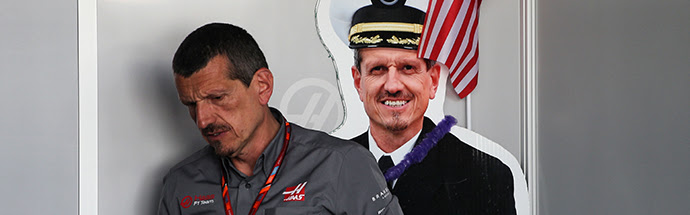
The Austrian team manager underlined Haas’ willingness to sign-up a young talent from the US, although he doesn’t consider it a priority, but sees no one who fits the bill.
The judgment call sparked a storm across the Atlantic, mainly within the IndyCar community, with 29-year-old Graham Rahal responding on Twitter and lambasting Steiner, calling his comments “Complete BS”, while Mario Andretti chimed in, saying Steiner was “Wrong and Arrogant!!”.
But Steiner has a point. There’s an old saying about American F1 fans:”too dumb for opera, too smart for NASCAR”. Stateside, Formula 1 has always been perceived as a classic niche of international motorsport, but one which never enjoyed the popularity of low-tech NASCAR or the country’s premiere single-seater IndyCar series.
There are no American engine manufacturers in F1 while the US Grand Prix has historically had many homes, most of which never succeeded in drawing in large crowds for a sustained period.
The last great driver to hail from the US was Andretti himself, and ever since it’s been slim pickings, with 2016 Indy 500 winner Alexander Rossi the last man to line up on an F1 grid, in 2015.
Many factors come into play to explain the lack of US presence at the pinnacle of motorsport, but geography is perhaps as good a reason as any other. F1 teams are all based in Europe, and so are almost all the sport’s feeders series, as well as the bulk of its human resources, engineers, mechanics, etc…
Most young American drivers simply aren’t acquainted with Grand Prix racing at the outset, and those who are usually don’t have the means to travel West to try to break into the big time.
Yet that doesn’t mean that America’s current talent pool does not include someone with the ability to perform at the highest level, as Steiner suggests. What the Austrian likely meant was that no young American currently racing in the US has followed the proper path, or protocol, to warrant a shot at F1.
Because of the sport’s specific environment and its typical complexities, a prospective driver is required to have his roots firmly entrenched in Europe and to have grown on F1’s historical home soil. Introducing a successful and active American driver to an unfamiliar and massively competitive environment – in short, throwing him in at the deep end – would be a recipe for disaster.
Formula 1 deserves to have an American driver on the grid. But he’ll need to come from the European boarding school of racing.
Phillip van Osten
Editor of F1i.com |
