
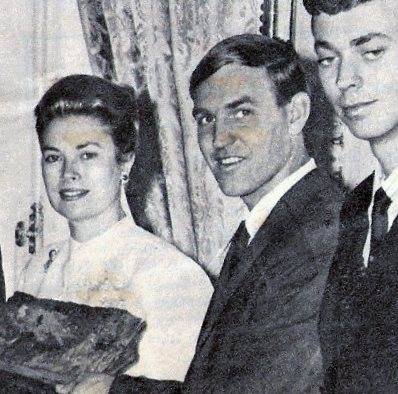
Anne-Jan Hettema, a multiple Springbok champion on two wheels and four, has rolled no fewer than 30 rally cars, drunk champagne with Princess Grace of Monaco and serenaded thousands with his golden voice.But when he was banned from competitive cycling in 1959, his grand adventure appeared to be over.
What seemed a final blow to his sporting career would soon prove to be the biggest boon imaginable.
The fates first smiled on five-year-old Jan when he departed his native Friesland as the storm clouds gathered over Europe in August 1939.
“You won’t believe it but I arrived in South Africa with my mother one week before the World War broke out,” he says.
The pair joined his father, who had come to seek a better life for his family a year earlier. Little did he know what a good decision that would turn out to be.
The Dutch family quickly settled down to life in their new country and, by 1950, Jan was serving his apprenticeship as a turner and machinist for the South African Railways.
It was there that he first fell into cycling. “No fewer than eight of the apprentices were cycling and they pulled me into it,” he says.
When asked whether he outsprinted them from the start, Jan chuckles. “I very much did!”
At that time most of his victories were on the road, as Pretoria did not have its own track yet.
To take part in track events, he had to commute to places like Troyeville in Johannesburg, where contemporaries like Tommy Shardelow were based.
Over the next two years, he would begin to catch the eye of the cycling authorities.
“I could sprint and won a hell of a lot of one and five-mile races. I held the one-mile SA record, which I broke by seven seconds.
“I eventually gave away over 400 trophies from my cycling career to various cycling clubs and so on.”
In 1955, he represented South Africa at the World Championships in Rome and also did some self-funded racing in Amsterdam.
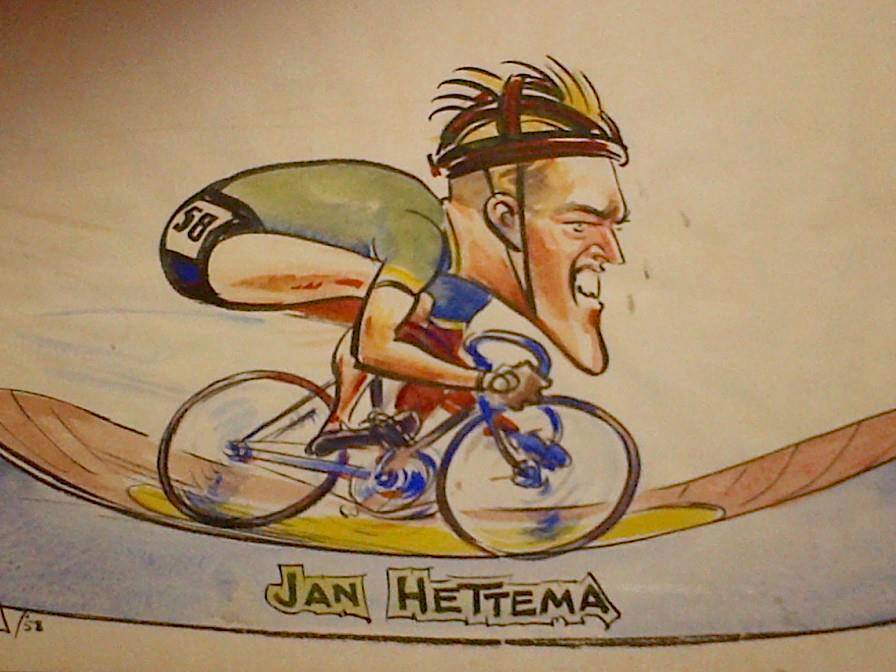
It was in his former homeland of Holland that he had his first brush with singing fame too.
“I went to a cycling meeting in the centre of town. That evening, the guest artist didn’t arrive, so the cyclists said to the organiser, ‘Jan Hettema is always singing, why don’t you ask him?’
“So I sang the hit of the day, got some flowers and an ovation. There were thousands of people.”
He would eventually pass that gift on to his daughter, well-known Afrikaans singer Helena Hettema.
“Every now and then she affords me the privilege to sing a few songs with her – we’re on two CDs together. On the one I sing Gigolo and on the other Unforgettable and Buona Sera.”
After returning to South Africa, he received his Springbok colours and was selected for the national team to attend the 1956 Olympic Games in Melbourne, Australia.
The riders that took part in the 4 000m team pursuit comprised Hettema, Bobby Fowler, Jimmy Swift and Abe Jonker. Ray Robinson and Tommy Shardelow were on the tandem.
“Obviously the Olympic Games was one of my most memorable moments. We broke the Olympic record but still came fourth and missed a medal very narrowly.
“We actually beat the gold medallists, Italy, the week before at an invitational event. Maybe we just peaked too early.
“We lost to France only because Jimmy rode off the track, so we were held back and didn’t go through to the finals.”
That same year he also set an unofficial world record of one minute and nine seconds in a 1 000m time-trial in Krugersdorp.
“Unfortunately, the officials didn’t mark the track with sandbags but it was recognised as a South African record and it stood for something like 20 years.”
Two years later, he represented the country at the Empire Games in Wales, where he finished seventh in the same event. “I was quite erratic,” admits Jan.
“I’d go brilliantly and then down again, it’s just one of those biorhythmic things I guess.”
Then, in a strange twist of fate, his almost decade-long cycling career came to a sudden and ignominious end when he was declared a “professional” for accepting prize money.
“In those days, professionals and amateurs were split. The amateur code was very strict – there were no professionals in the Olympic Games.
“I won two races at Grand Central near Johannesburg – it’s an airport actually but it had a track – and I won 10 pounds.
“I didn’t know anything about the implications and the next thing the cycling federation declared me professional and banned me from competing.”
That was something they proved willing to overlook when SA could not field a full pursuit team for the 1960 Olympics and once again invited Jan to compete.
“They asked me to ride again but I decided no.” By that time, he had already begun to rev up his motorsport career.

“I did motorsport for over 40 years and had some tremendous highlights.”
Those included becoming a five-time SA rally champion and winning more than 100 rallies, including 37 national championship races. He was also the first winner of the Roof of Africa Rally in 1967.
“The advantage of motorsport was that I did half a dozen Monte Carlo rallies. I went to France six years in-a-row for two months at a time to practice, so that was very, very nice.”
It was there that Jan had the pleasure of a private audience with Princess Grace, which he calls one of the absolute highlights of his life.
“Total had got a little fossilized fish from the Smithsonian Institute – apparently it was 17 million years old or something.
“The Grimaldis have a museum and so I was chosen by Total to go and hand it over. That was just after the ’64 rally, because you know Monaco is very much involved in motor racing.”
After the official handover, champagne and photographs, Jan found himself alone with the princess.
“Somehow I got her all by herself. She was sitting at a grand piano and I sat talking to her.”
Despite having a cold and a red nose, he says the former movie star was still incredibly beautiful.
“She was so nice to me, as if I were her equal. That was tremendous; I must have spoken to her for half an hour.”
He says they talked about her brother John Kelly, who had been an American sculler at the same Olympics that Jan had attended. The princess also asked him to bring her a lion cub for the principality’s zoo.
Those glamorous moments aside, rally driving was a tough career and, having cycled every day of his life for the preceding 10 years, Jan was well prepared for its physical demands.
“For the Monte Carlo rally, for example, I started in Oslo and drove four days and four nights continuously. And then only do you get to the real nitty gritty of the event.”
By then he had abandoned the bike and taken up squash to sharpen his reflexes and maintain fitness. But neither cycling nor squash could have prepared him for the thrills – and spills – of rally driving.
“We used to say if you didn’t spin once in a rally you weren’t going fast enough! Inevitably, we sometimes just rolled.
“I once fell 264 feet (almost 25 storeys) down the side of a mountain. But that wasn’t my worst roll.
That came early one morning on a rally through KwaZulu-Natal after some curious local children had rolled stones into the road. “I hit one of those stones and went arse over kettle seven times.”
True to form, Jan walked away unscathed once more. “I wasn’t ever really hurt because you’re always strapped in.”
Later the whiplash and impacts would have their cumulative effect as the cushions between his vertebrae eventually collapsed, necessitating a neck fusion.
The spry 80-year-old, who celebrates his next birthday later this month, says he finally stopped his involvement with the sport in 2002.
“I also organised the Total Economy Run 27 times. My last event was driving from Zimbabwe to Cape Town on one tank of fuel.”
Around the same time, he also gave up his surprisingly gentler sideline career as an egg farmer.
“I always thought I’d need to have a back-up, so I started doing that in 1977. I enjoyed farming tremendously.”
Today the grandfather of one resides on a smallholding in the little village of Tweedracht outside Pretoria with wife Elsa. Helena is based in the Jacaranda City and his son Sean lives in nearby Johannesburg.
“I’ve been most fortunate. I saw the whole world. Getting banned from cycling was an advantage in the end.”
Jan Hettema was an Honourary Member of the Pretoria Motor Club, a past President of the club .
This story first appeared Inthebunch and was written by Coetzee Gouws April 2014.