


According to most accounts, the biggest dispute regarded Laura’s increased involvement in company affairs in the years preceding the walkout. Her implication in how Ferrari was being run didn’t bode well with one of the carmaker’s Sales Managers, Girolamo Gardini, who frequently argued with Enzo over this predicament. Over time, the discussions became so heated that Gardini simply cornered Enzo and threatened to leave the company if Laura wasn’t taken out of the Ferrari equation. Obviously, Il Commendatore refused to comply with such a demand from one of its employees and promptly laid off Gardini, who wasn’t exactly an immovable pillar in the company’s upcoming plans but he was one of the key people responsible for its success.
As it happens, Girolamo Gardini wasn’t the only one who was against Laura’s involvement in how Ferrari rolled, especially when it came to her bad-mouthing certain figures in the company, so his thoughts were largely mirrored by a number of other critical employees as well. Sports car development chief Giotto Bizzarrini, chief engineer Carlo Chiti, Scuderia Ferrari manager Romolo Tavoni and a number of five other key people backed Gardini. As a matter of fact, they went as far as sending a group-signed letter to complain about Laura’s meddling with the Scuderia.
Following the news of Gardini’s dismissal they all left the company in October 1961, leaving Ferrari without some of its best executives and with upcoming sports car projects in limbo. Some say that they were actually all sacked by Enzo, while others say that it was a common decision made among themselves. Either way, that is less important

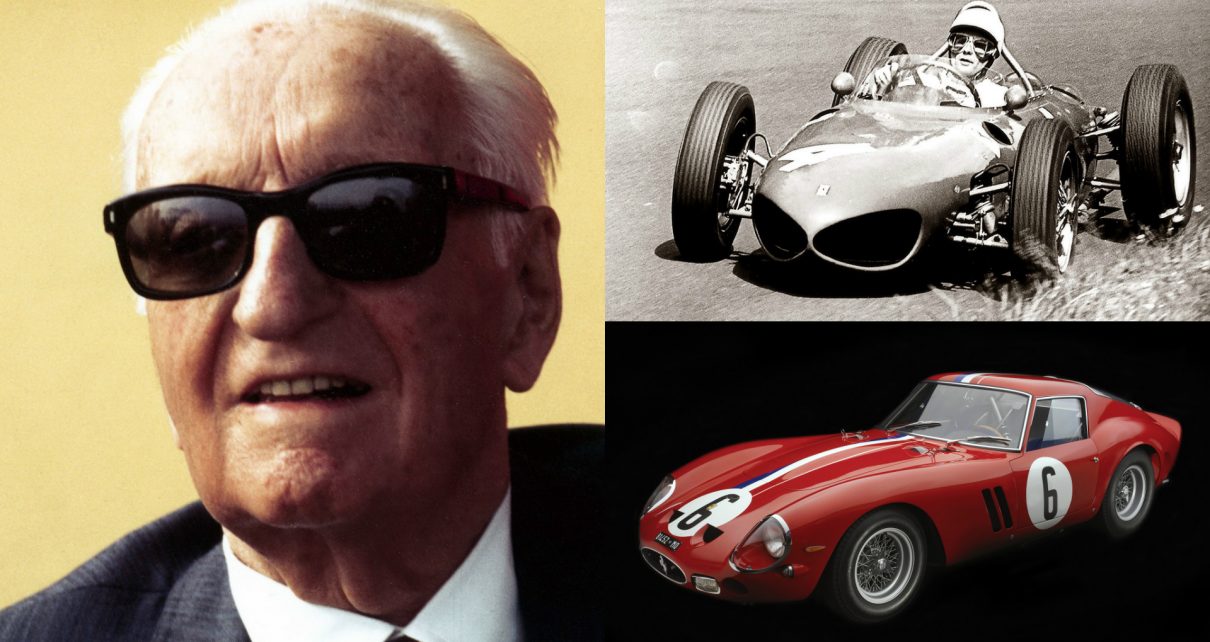
Even though the Scuderia secured both the World Championship of Drivers and the International Cup for F1 Manufacturers titles in 1961 – thanks to the genius of Phil Hill and the speed of the distinctively designed Ferrari 156 F1 “Sharknose” – the two triumphs had been overshadowed by Wolfgang von Trips’ death at Monza, a crash that also took the lives of fifteen spectators.
The bad omen caused by the increasing death count in racing, the arguments with Ferruccio Lamborghini and the Great Walkout, culminating with the spanking it got from Ford at Le Mans almost forced Enzo to close shop in the 1960s. Arguably, the engineers and designers that left during Ferrari’s “Night of the Long Knives” caused the biggest amount of damage to the company, since it was more than just a PR blow and an actual loss of talent from Maranello’s rather small family of employees. Not to mention that almost immediately after leaving Ferrari, Giotto Bizzarrini, Carlo Chiti and Romolo Tavoni teamed up to form ATS (Automobili Turismo e Sport), a soon-to-be arch-enemy of Ferrari both on the road and on the track, thanks to plenty of funding from Count Giovanni Volpi.

Fortunately, all these wretched events didn’t manage to put an end to Il Commendatore’s dream of racing, instead empowering him to bounce back and become even more successful. In some ways, we have to actually thank almost all of Enzo’s enemies over the years, since they are partly and not necessarily directly responsible for the Prancing Horse’s evolution over the years.