
But with 14 of the 18 records set during the past two seasons, MotoGP performance will soon need to be addressed to remain within the physical limits of the circuits. Especially with machine minimum weight being reduced by 2kg for 2015 and a two-litre fuel increase for the leading Honda and Yamaha teams from 2016.
Aside from an unpopular switch to 800cc engines from 2007-2011, decreasing fuel has been the main method to hinder MotoGP performance for the past decade. So what are the other options?
A rev limit is long rumoured, but remains just that and wouldn’t reduce corner speeds. But other known 2016 changes – a control ECU and switch from Bridgestone to Michelin control tyres – may offer a chance to peg back performance.
Tyres have the biggest lap time impact of any motorcycle component and are thus the best chance of ‘resetting’ the pace. However getting Michelin to make a much ‘slower’ tyre would be a hard sell, particularly given the negative publicity Pirelli received for hard or high-wearing tyres in F1.
With the MotoGP factories all contributing to the new control ECU, a radical drop in performance is unlikely – unless some software areas are deemed out of bounds for the manufacturers…
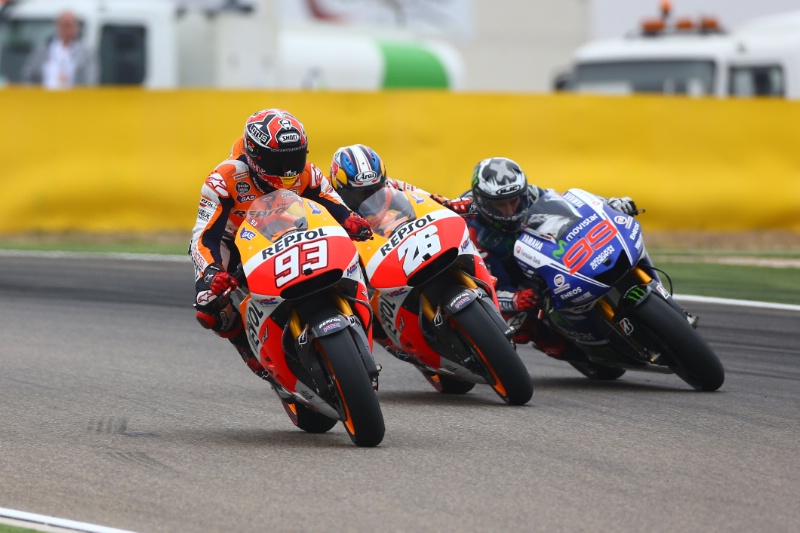
Meanwhile, Honda holds 14 of the 18 lap records, one less than last year due to Lorenzo adding Motegi to his Misano and Jerez lap records. The oldest record on the present calendar is Casey Stoner’s 2008 time at Losail, which is also Ducati’s only fastest race lap.