

When NASCAR driver Ryan Newman’s car flipped during the Daytona 500, it was the HANS device developed by former Michigan State professor Robert Hubbard that helped save his life.
HANS, or Head and Neck Support, was developed by Hubbard and his brother-in-law and former racecar driver Jim Downing.
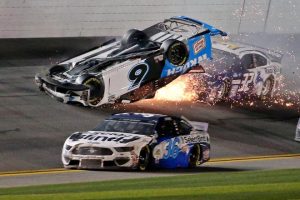
The device is a head restraint that reduces the compression a spine may endure after an accident. The device works by attaching to the helmet of a driver and preventing it from going forward like it would in a normal car with typical seat belts.Following the crash, Newman was in serious condition because of the injuries he sustained, but doctors indicated that they are not life threatening, according to a statement from his team, Roush Fenway Racing.
“I think it’s awesome,” mechanical engineering professor Tamara Reid Bush said. “That device has been around for a long, long time, but it took the death of Dale Earnhardt before it actually stated taking off and getting noticed commercially, so the fact that so many racers wear it now and that it has saved so many lives is amazing.”
Prior to the 2001 death of NASCAR driver Dale Earnhardt, HANS devices were not required in cars. NASCAR began recommending the devices be installed in cars in 2001, but they were made mandatory in 2005. Since Earnhardt, no NASCAR drivers have died on the track.
The creators of the HANS device worked closely with racecar drivers to ensure the device did not inhibit their driving in any way while also increasing their safety.
“In this instance, it can be seconds or less than seconds that determines if a person wins or doesn’t win,” Bush said. “They wanted to make sure that adding another device inside their vehicle doesn’t impair their ability to win.”
The HANS devices have continued to be developed, and now are at their smallest and lightest weight.
“It didn’t affect their driving at all, but it affected their safety,” Bush said.
Source: statenews.com