
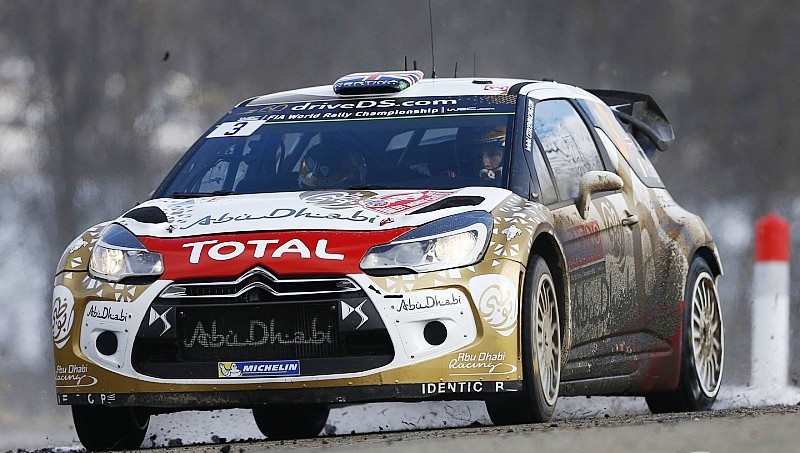
The European winter is already long forgotten! As it crosses the Atlantic, the Citroën Total Abu Dhabi World Rally Team sets off on a long series of six consecutive gravel rallies, lasting until August.
And yet the DS 3 WRCs will be facing very specific conditions in Mexico. Far from the more typical courses thrown up by the WRC calendar, the León-based rally is contested exclusively at altitudes in excess of 1,800 metres above sea level.
Combined with high temperatures, often above 25°C, the conditions deprive the drivers and their cars of much-needed air. Tiring for the body, this lack of oxygen also results in a significant loss of engine power and difficulties in cooling the brakes.
Thanks to the upgrades made to the DS 3 WRCs during the off-season affecting the engine, transmission, chassis and suspension, and aerodynamics, Mads Østberg and Kris Meeke will have considerably quicker cars at their disposal than last year.
Fourth in Monaco, Mads Østberg also scored points on the Swedish snow. For his fifth appearance in León, the Norwegian can call upon his extensive knowledge of the surface. Having won five stages in 2014 in the DS 3 WRC, Mads had led the rally between SS3 and SS6.
Meanwhile, Kris Meeke enjoyed his first outing here last year. With a win on one of the stages, the Briton had acquired a great deal of experience at a rally that was entirely new to him.
Two DS 3 R5s will be competing in the FIA WRC2 championship. Category leader after the opening two rounds, Stéphane Lefebvre will be making his debut in Mexico.
A high-altitude route, very concentrated around Leon
Apart from the León Street Stage (SS6/SS14), all the other tests are identical to those contested in 2014. The twenty-one stages included on the schedule can be split into three categories: six are short city-centre tests or super special stages on the León Autodrome, eight are between 8.25km and 15.54km in length and seven others are much longer, between 30.27km and 55.82km.
The shakedown will get underway on Thursday, 5 March at 9.00am, in Llano Grande, on a 5.55 kilometre-long stage. A few hours later, the very colourful ceremonial start will take the crews to the streets of the former mining city of Guanajuato, a UNESCO World Heritage site.
The first morning will feature four stages. After Los Mexicanos (9.81km), El Chocolate will give a clearer idea of where everyone stands as the stage is some 44.13 kilometres in length and reaches a peak of 2,781 metres above sea level, the highest point of the rally. Las Minas (15.54km) and the León Street Stage (1.37km) will complete this section before the midday service. The afternoon features the same programme with Los Mexicanos, El Chocolate and Las Minas before the crews complete two runs on the Super Special Stage, on the León Autodrome.
With the first 150 kilometres done and dusted, the drivers will attack the rally’s longest leg on Saturday, with four stages over thirty kilometres long. After Ibarrilla (30.27km), the 42.90 kilometre-long Otates will be next up before the crews tackle El Brinco (8.25km), which will be broadcast live on television, and the León Street Stage. The 30-minute midday service will provide a break, before the repeated runs on Ibarrilla, Otates and El Brinco. The crews will end the day in the service park, after two more runs on the Super Special Stage at the Autodrome.
The final day features three stages. In their changed running order, the crews will set off on the 55.82km-long Guanajuatito test, before concluding the rally with the 11.59kms of Derramadero and a third run on the 8.25km-long El Brinco, which will be televised again and used as the Power Stage.
The rally is scheduled to finish in León on Sunday, 8 March from 2.30pm.