
 Fifty years since the first world championship Austrian Grand Prix, one of F1′s historic races returns this weekend.
It’s the first F1 race in Austria since 2003, after which its track became one of several casualties among European racing venues as Formula One expanded into new territory.
But the failures of far-flung races in South Korea and India left gaps to fill on the 2014 schedule. Red Bull owner Dietrich Mateschitz swooped at the opportunity to restore Austria to the F1 schedule and it proved a popular move: tickets for the race sold out long ago, something which could not have been said of the two events which have been dropped.
This is the second return to the calendar for the venue now known as the Red Bull Ring. In its original incarnation, the Osterreichring was once the fastest circuit in Formula One. Axed from the calendar in 1987, it returned a decade later, renamed the A1-Ring.
At the time it was the first major F1 circuit construction to have been handled by the company which has held a near-monopoly on F1 track design since: Tilke Gmbh. While the passing of the grand old circuit is still lamented, the short and simple truncated version has its own appeal.
During its last run from 1997 to 2003 the A1-Ring gained a reputation for producing good races enlivened by several passing opportunities. Hopefully that will not be damaged too much by the addition of a pair of DRS zones.
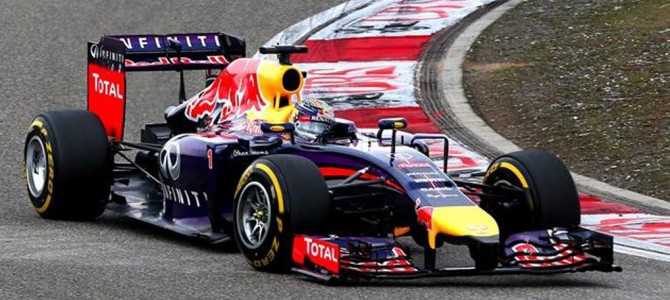
The irony of this track being owned by Red Bull can’t have escaped anybody, because one look at the track layout tells you it is unlikely to be a happy hunting ground for their F1 cars. Team principal Christian Horner joked about installing chicanes on its long straights to tip the balance away from horsepower, which they lack, and towards downforce, which they have in abundance.
But the last race was a timely reminder that Red Bull’s well-drilled F1 operation is never to be underestimated. On a day when Mercedes faltered and teams such as Force India and Williams could or even should have won, Red Bull were the ones who capitalised. Still, it’s hard to see them doing so again without another double disaster for Mercedes.
The latter part of the lap does offer something for the RB10 to get its teeth into, in the form of a few quick corners in the model of the old course. The presence of these bends make it all the more surprising Pirelli have allocated their softest available tyres for this race.
F1′s official tyre supplier has previously played it safe with their tyre choices when heading to new venues. The choice of the soft and super-soft rubber is another indication how conservative this year’s compounds are.
Another distinguishing feature of the Red Bull Ring is its relatively high altitude. Located 660m above sea level in the Styrian mountains, this is the highest venue on the calendar bar Interlagos in Brazil (750m).
This could have an effect on reliability. “At the time of naturally aspirated engines, the altitude – the circuit is over 600 metres above sea level – made life easier from a reliability point of view,” explained Ferrari’s engine and electronics deputy director Mattia Binotto. “But now with the use of the turbocharger this advantage is cancelled and we can expect a similar challenge to that posed by the Montreal circuit.”