

Can Isotta Fraschini and Avions Voisin be far behind?
Though Hispano-Suiza began building cars in 1904, it is best known for its grand, luxurious and technologically advanced cars of the 1920s and 1930s. It focused on aircraft engine production during WWII; automobile production never resumed following the conflict. As a manufacturing concern, it was effectively shuttered in 1968.
Our first look at the Carmen leaves much to the imagination, but we can see the bones of a streamlined fuselage taking shape.
Believe it or not, this isn’t the first Hispano Suiza revival attempt: The company brought prototypes dubbed the HS21, the K8 and the HS21-GTS to Geneva in 2000, 2001 and 2002, respectively. More recently, in 2010, Hispano Suiza showed the V10 Supercharged, a reinterpretation of the Audi R8, at the Swiss show. Nothing came of the efforts.
Will it be different this time around? The switch to an EV powertrain is an interesting twist, but it remains to be seen whether that will make ambitious high-end, small-production car projects any more viable (it should make complying with emissions regulations far simpler, at least).
The automaker is currently taking reservations for the Carmen at its website. If you’re not yet sold, you could always cast your bid for the 1936 Hispano-Suiza K6 Berline by Vanvooren offered by RM Sotheby’s at the upcoming Amelia Island auction. It’s a great example of why the marque is worth reviving in the first place.

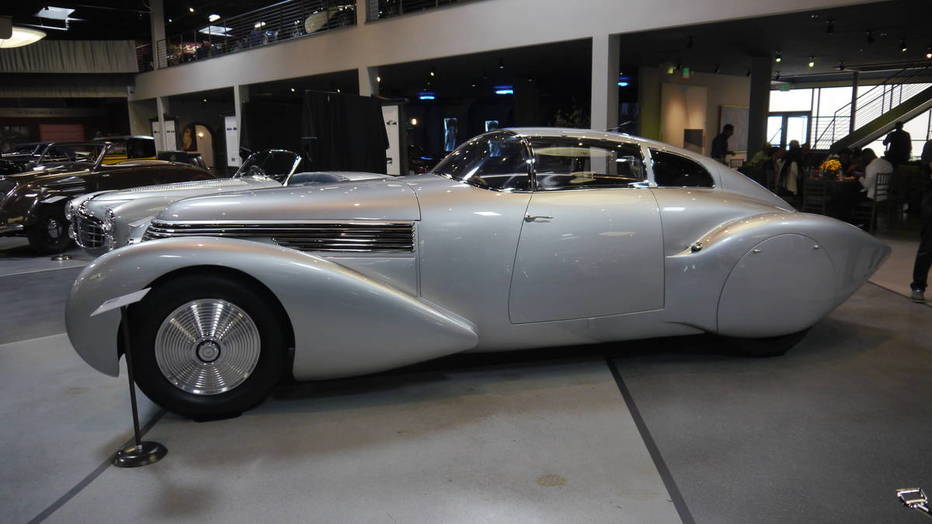
Here’s a shadowy teaser of the Carmen. The rear fenders are a clear reference to the Dubonnet Xenia. The traditional Hispano Suiza stork emblem is barely visible behind the front wheel.
Source: Autoweek